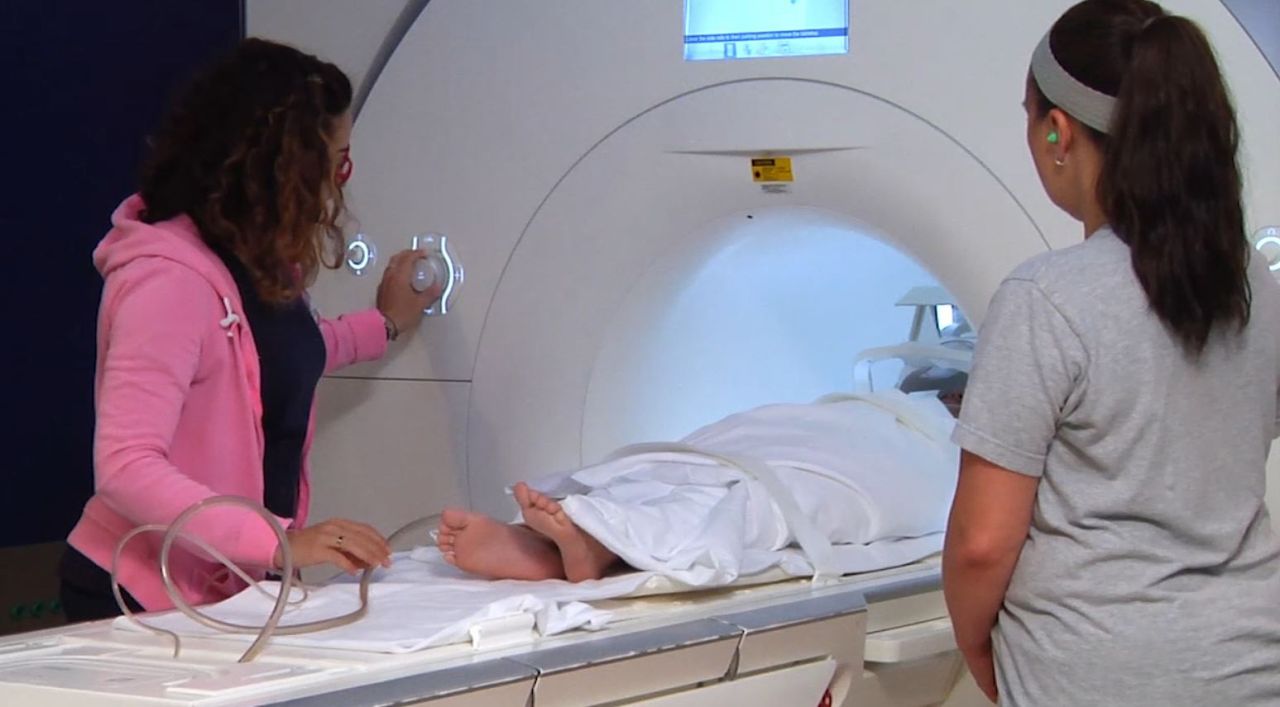
Researchers have found significant differences in nine brain white matter tracts in individuals with Attention Deficit Hyperactivity Disorder, using artificial intelligence (AI) to analyze specialized brain MRI scans of adolescents.
The results of the study were presented in November 2023 at the annual meeting of the Radiological Society of North America (RSNA), an association of radiologists, radiation oncologists, medical physicists and related scientists promoting excellence in patient care and health care delivery through education, research and technologic innovation. The Society is based in Oak Brook, Illinois.
ADHD is a common disorder often diagnosed in childhood and continuing into adulthood, according to the Centers for Disease Control and Prevention. In the US, an estimated 5.7 million children and adolescents between the ages of 6 and 17 have been diagnosed with ADHD.
“ADHD often manifests at an early age and can have a massive impact on someone’s quality of life and ability to function in society. It is also becoming increasingly prevalent in society among today’s youth, with the influx of smartphones and other distracting devices readily accessible,” said study co-author Justin Huynh, M.S., a research specialist in the Department of Neuroradiology at the University of California, San Francisco, and medical student at the Carle Illinois College of Medicine at Urbana-Champaign. Co-authors of the study are Pierre F. Nedelec, M.S., M.T.M., Samuel Lashof-Regas, Michael Romano, M.D., Ph.D., Leo P. Sugrue, M.D., Ph.D., and Andreas M. Rauschecker, M.D., Ph.D.
Still difficult to diagnose
Children with ADHD may have trouble paying attention, controlling impulsive behaviors or regulating activity; early diagnosis and intervention are key to managing the condition.
ADHD is extremely difficult to diagnose and still relies primarily on subjective self-reported surveys, Huynh noted. “There is definitely an unmet need for more objective metrics for diagnosis. That’s the gap we are trying to fill.”
This is the first study to leverage deep-learning tools to pinpoint markers in the brain that are common in the specialized MRI scans of young patients with ADHD, Huynh noted.
The team tapped into the multi-institutional Adolescent Brain Cognitive Development (ABCD) Study, which includes brain imaging, clinical surveys, and other data on over 11,000 adolescents from 21 research sites in the U.S. The brain imaging data included a specialized type of MRI called diffusion-weighted imaging (DWI).
With the help of AI, the researchers identified nine white matter tracts (fibers) in which the MRI signature showed elevated levels of a certain marker that coincides with symptoms of ADHD.
A promising first step
“Many people with ADHD go undiagnosed, falling through the cracks and failing to receive treatment, which greatly impacts their quality of life. Our findings might provide a promising first step towards building an objective, imaging-AI-based approach to diagnosis,” Huynh said.
“Prior research studies using AI to detect ADHD have not been successful due to a small sample size and the complexity of the disorder,” Huynh said.
What researchers did
The research team selected a group of 1,704 individuals from the ABCD dataset, including adolescents with and without ADHD.
Using DWI scans, the researchers extracted fractional anisotropy (FA) measurements along 30 major white matter tracts in the brain.
FA is a measure of how water molecules move along the fibers of white matter tracts.
The FA values from 1,371 individuals were used as input for training a deep-learning AI model, which was then tested on 333 patients, including 193 diagnosed with ADHD and 140 without.
ADHD diagnoses were determined by the Brief Problem Monitor assessment, a rating tool used for monitoring a child’s functioning and their responses to interventions.
What researchers learned
With the help of AI, the researchers discovered that in patients with ADHD, FA values were significantly elevated in nine white matter tracts.
“These differences in MRI signatures in individuals with ADHD have never been seen before at this level of detail,” Huynh said.
“In general, the abnormalities seen in the nine white matter tracts coincide with the symptoms of ADHD.”
Future plans
The researchers intend to continue obtaining data from the rest of the individuals in the ABCD dataset, comparing the performance of additional AI models.
“Many people feel that they have ADHD, but it is undiagnosed due to the subjective nature of the available diagnostic tests,” Huynh said.
“This method provides a promising step towards finding imaging biomarkers that can be used to diagnose ADHD in a quantitative, objective diagnostic framework,” Huynh said.